An image of Freelio's project ui

Sept 2016 - Feb 2017

Product Designer

Kailash Aurangabadkar, Principal Engineer

Kevin Konishi, Lead Product Manager

Timeline

Role

Team

Sept 2016 - Feb 2017

Product Designer

Kailash Aurangabadkar, Principal Engineer

Kevin Konishi, Lead Product Manager

Timeline

Role

Team

Sept 2016 - Feb 2017

Product Designer

Kailash Aurangabadkar, Principal Engineer

Kevin Konishi, Lead Product Manager

Timeline

Role

Team

01 Research Process

Discovery & Framing

At the beginning of this product, my product manager, lead developer, and I went through a two-month Discovery and Framing session that included interviewing close to 100 people including Merchandising Analysts, Vendors, Receiving Associates and In-store Associates.

Process

Contextual inquiry is a type of ethnographic field study that involves in-depth observation and interviews of a small sample of users to gain a robust understanding of work practices and behaviors.

Contextual Inquiry

Participatory research actively involves users as co-creators in the design process, shifting them from passive subjects to active partners. This collaborative, co-design method helps identify deeper user needs, emotions, and hidden opportunities early on, ensuring solutions are deeply relevant, innovative, and user-centered.

Participatory Research

Discovery & Framing

At the beginning of this product, my product manager, lead developer, and I went through a two-month Discovery and Framing session that included interviewing close to 100 people including Merchandising Analysts, Vendors, Receiving Associates and In-store Associates.

Process

Contextual inquiry is a type of ethnographic field study that involves in-depth observation and interviews of a small sample of users to gain a robust understanding of work practices and behaviors.

Contextual Inquiry

Participatory research actively involves users as co-creators in the design process, shifting them from passive subjects to active partners. This collaborative, co-design method helps identify deeper user needs, emotions, and hidden opportunities early on, ensuring solutions are deeply relevant, innovative, and user-centered.

Participatory Research

Discovery & Framing

At the beginning of this product, my product manager, lead developer, and I went through a two-month Discovery and Framing session that included interviewing close to 100 people including Merchandising Analysts, Vendors, Receiving Associates and In-store Associates.

Process

Contextual inquiry is a type of ethnographic field study that involves in-depth observation and interviews of a small sample of users to gain a robust understanding of work practices and behaviors.

Contextual Inquiry

Participatory research actively involves users as co-creators in the design process, shifting them from passive subjects to active partners. This collaborative, co-design method helps identify deeper user needs, emotions, and hidden opportunities early on, ensuring solutions are deeply relevant, innovative, and user-centered.

Participatory Research

02 Research Insights

Lengthy Ordering Process

Human Error

Inaccurate Inventory

Ordering New Tools for the Tool Rental Centers is a week-long process. Merchandising Analysts have to export performance metrics from a database, analyze rental performance, and manually enter and create merchandising orders into another database.

When manually creating and entering orders, analysts have to enter hundreds of thousands of tools into a database. When comparing what was intended to be ordered with what was actually ordered, we found a lot of human error.

Because the ordering process was completely manual, orders were inaccurately being entered into a database. Full of human error, this caused both the Merchandising Analysts and Store Associates to have different and inaccurate inventory lists.

1
2
3

Transparency on Pricing

Ease of Form Field Entry

Clear Reason for forms

Less distraction

Baymard suggests that when users come to their cart, they are mainly looking at pricing. If a user comes to their cart and pricing is not what was expected during the ordering process, the user is likely to abandon.

When the user arrives at checkout, we are confident that means they would like to place their order. Based on Baymard’s research, users will abandon their order if there are too many form fields or if the fields are difficult to fill out.

Additionally, users are likely to abandon their order if they do not see a clear reason for the required forms.

The legacy design for Cart & Checkout is modal heavy and includes many up-sells. Baymard suggests that to increase conversion, nothing in the Cart or Checkout experience should detract the user from their main goals.

1
2
3
4

Transparency on Pricing

Ease of Form Field Entry

Clear Reason for forms

Less distraction

Baymard suggests that when users come to their cart, they are mainly looking at pricing. If a user comes to their cart and pricing is not what was expected during the ordering process, the user is likely to abandon.

When the user arrives at checkout, we are confident that means they would like to place their order. Based on Baymard’s research, users will abandon their order if there are too many form fields or if the fields are difficult to fill out.

Additionally, users are likely to abandon their order if they do not see a clear reason for the required forms.

The legacy design for Cart & Checkout is modal heavy and includes many up-sells. Baymard suggests that to increase conversion, nothing in the Cart or Checkout experience should detract the user from their main goals.

1
2
3
4

03 Working with Existing Products

data synchronization

During our research, another product team was developing Rental ToolBox, a store-facing application that is the central place for all Tool Rental needs. Our goal is to create a corporate-facing application to be the central place for business optimization.

Corporate Associates

Need an accurate view of inventory at all stores with a quick and easy ordering process with real-time store updates.


Store Associates

Need an accurate view of inventory at all stores with an easy tool lookup to be able to tell customers which tools are available for rental and at other stores.


04 Participatory Design

Without a current system and because the process differs between users, I performed a blind card sort to gather and compare the core process for creating an order.

During this activity, I gave users blank notecards, a sharpie and instructions to write down every step of the ordering process and what information they needed for each step.

Mental Model Discovery

05 Task Analysis

From the blind card sort, I was able to find a similar process that each user took. Users are completing this process over the course of one week, every month.

Aged

Upfleet

Missing

Reviews recommended inventory by tool & Store

Reviews recommended inventory by tool & Store

Decides how many to order

Download Performance Metrics

Filter based on seasonality

Break into regions and markets

Break orders into: Missing, Aged, Upfleet

Creates order in excel

Manually enters orders into a database

Reviews recommended inventory by tool & Store

Reviews Current inventory by tool & Store

Reviews Current inventory by tool & Store

Reviews Current inventory by tool & Store

Decides how many to order

Decides how many to order

06 Persona Development

Demographics

  • Lives in Midtown

  • Has worked as a Merchandising Analyst for 4 years

  • Is an avid problem solver

  • Loves working with others to achieve goals

  • Always looking for new challenges


Drivers

  • Enjoys understanding complex problems

  • Wants to understand why tools are being ordered

  • Wants to keep stores in stock

  • Has always viewed herself as a natural achiever


Goals

  • Wants merchandise to be shipped to the correct stores

  • Strives to have an accurate number of tools to optimize revenue

  • Needs an accurate inventory list

  • Expects that stores will have an accurate inventory list


Pain Points

  • Has a difficult time prioritizing and analyzing store requests

  • Takes a week each month to manually evaluate and order tools

  • Worries she will enter something incorrectly while ordering


07 Brainstorming

08 Iterating & Testing

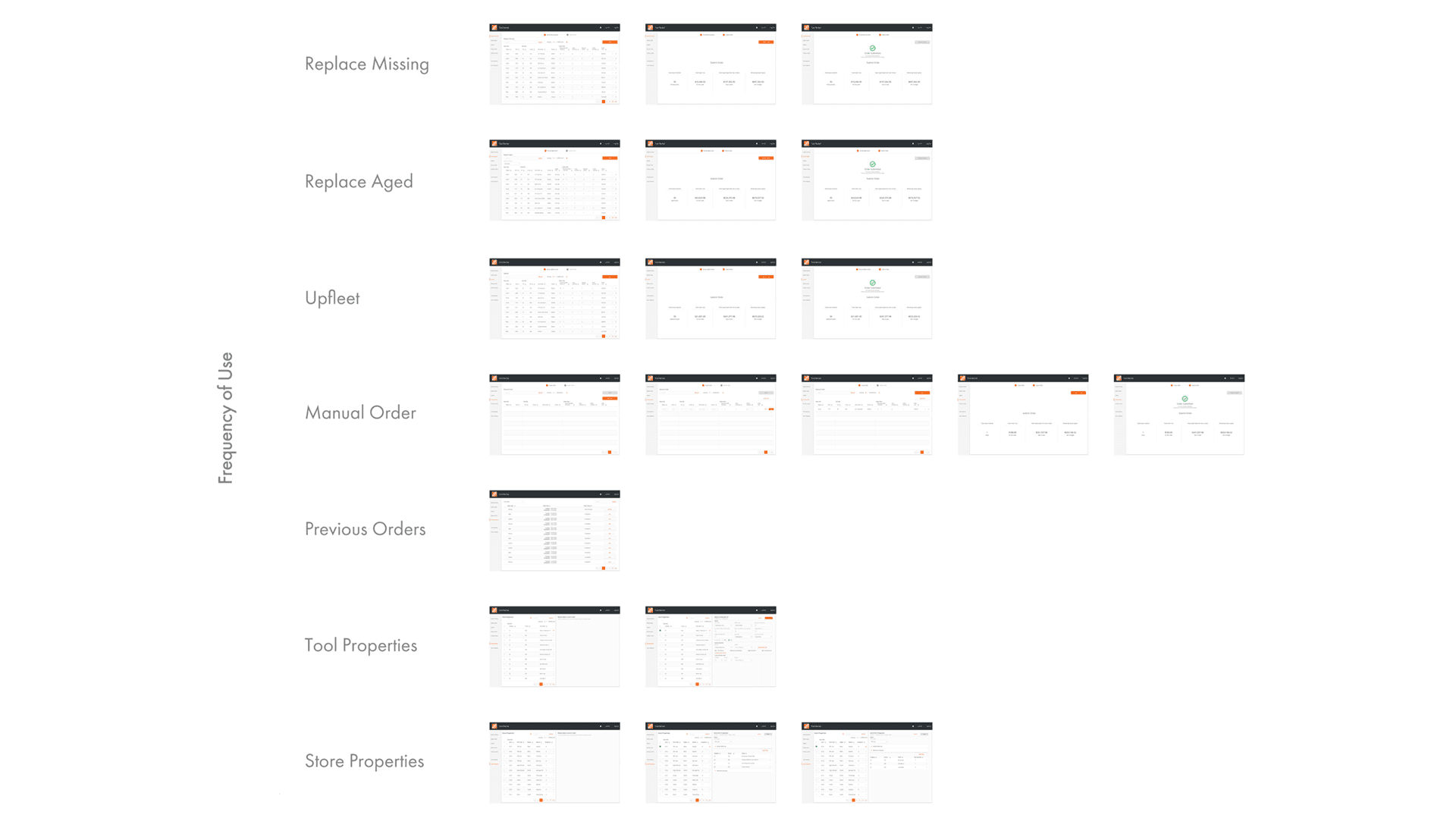
09 Final Information Architecture
10 Final Design
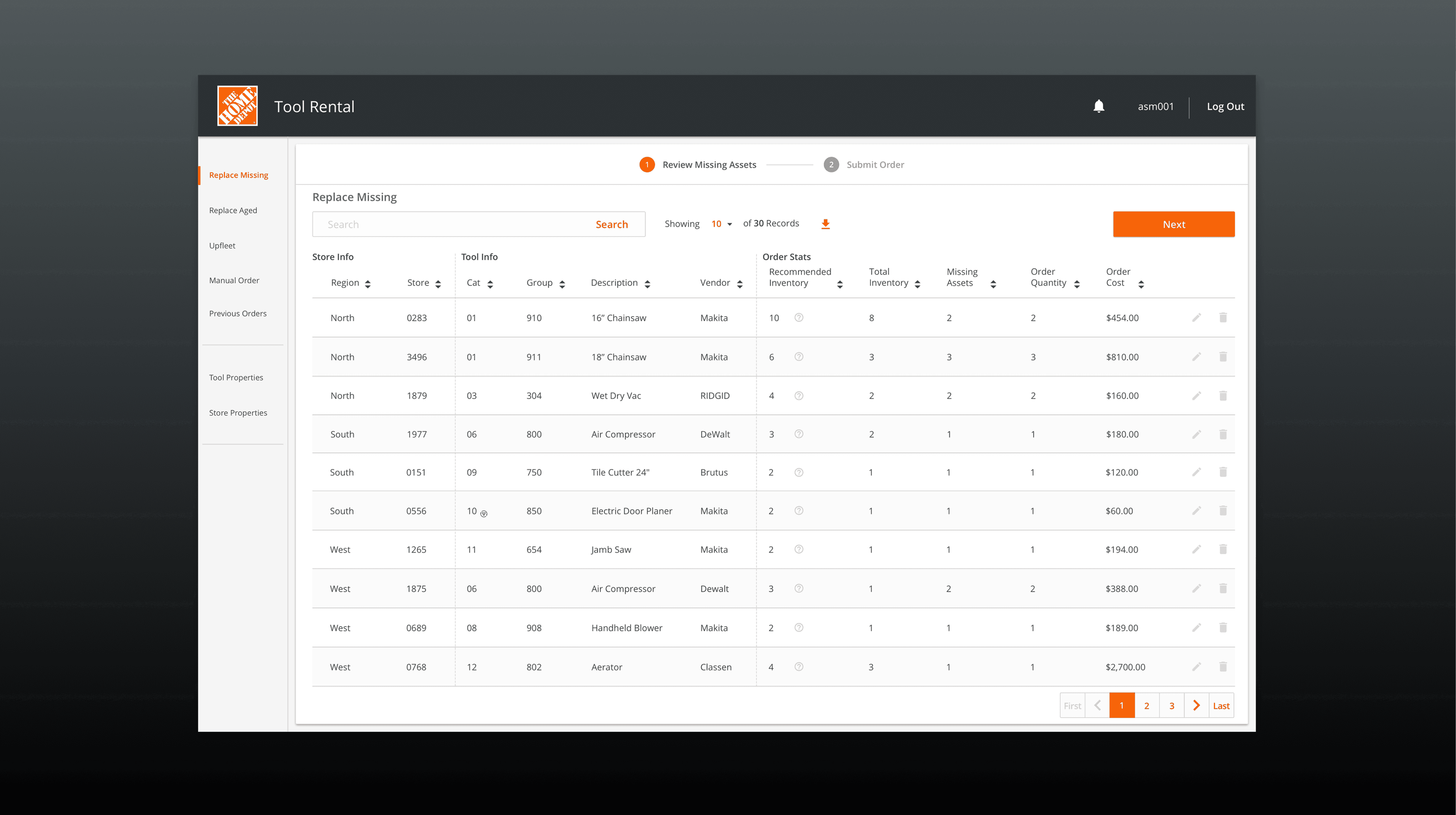
Automated Inventory

When the user logs into the application, the first thing the see is a real-time list of items that the system is suggesting be ordered for stores. The Merchandising Analyst can now review the list and submit the orders daily so that they don’t have to do a much larger order monthly.

Solution

Section Title

Solution

Section Title

Solution

11 Final Design

Real-time Data

When the user comes to the application, they can see real-time updates of what inventory is at what store, what stores need new items, and how much is left in their budget. Providing this information allows our Merchandising Analysts to stock each store with the needed inventory to optimize sales.

Solution

Real-time Data

When the user comes to the application, they can see real-time updates of what inventory is at what store, what stores need new items, and how much is left in their budget. Providing this information allows our Merchandising Analysts to stock each store with the needed inventory to optimize sales.

Solution

Real-time Data

When the user comes to the application, they can see real-time updates of what inventory is at what store, what stores need new items, and how much is left in their budget. Providing this information allows our Merchandising Analysts to stock each store with the needed inventory to optimize sales.

Solution

Final Thoughts

This product was extremely successful and improved the merchandising team's ordering operations from a monthly process to a weekly, three-hour process. The product also saved the company money from an operational standpoint and a sales standpoint.

Outcome

Final Thoughts

This product was extremely successful and improved the merchandising team's ordering operations from a monthly process to a weekly, three-hour process. The product also saved the company money from an operational standpoint and a sales standpoint.

Outcome

Final Thoughts

This product was extremely successful and improved the merchandising team's ordering operations from a monthly process to a weekly, three-hour process. The product also saved the company money from an operational standpoint and a sales standpoint.

Outcome